



Following the Paper Trail: Inside Mozambique's National Dialogue on Education Data
Following the Paper Trail: Inside Mozambique's National Dialogue on Education Data
Maputo, Mozambique
August 2026
Before ministers and researchers sat down in Maputo to talk policy, a small team followed a school register from the classroom to the capital, to see for themselves what Mozambique's education data system can, and cannot, do.
At 3 de Fevereiro Primary School, just outside Maputo, a teacher opens a well-worn register and begins to answer questions she has not often been asked before: not how many pupils are enrolled, but how that number gets from her classroom into a national database, and what happens to it once it arrives. A short drive away, at Machava Secondary School, the conversation is the same. So it is at Eduardo Mondlane Secondary School and Matola A Complete Primary School, and at the District Education, Youth and Technology Services offices in KaMphumo and Matola.
These four school visits and two district-office interviews, carried out on 3 and 4 August 2026, were not a side event. They were the evidence base for the KIX Africa 19 Hub National Policy Dialogue that followed them in Maputo, and they set the tone for everything that came after: a week built on first-hand evidence rather than assumption.
|
WHAT KIX Africa Hub 19 National Policy Dialogue |
WHERE Maputo, Mozambique (Hotel Afrin) |
|
WHEN 3 to 7 August 2026, preceded by planning from 31 July |
WHO AU-IPED, UNESCO-IICBA and UNICEF ESARO (KIX Africa Hub 19 consortium), GPE-KIX, Mozambique's Ministry of Education and Culture |
|
FOCUS Teacher development, equity and inclusion, early childhood education, EMIS |
TURNOUT About 50 participants from government, academia and partners |
A dialogue three years in the making
The Dialogue was convened by the African Union Pan-African Institute of Education for Development (AU-IPED), together with Mozambique's Ministry of Education and Culture (MEC). AU-IPED forms KIX Africa Hub 19 in consortium with UNESCO's International Institute for Capacity Building in Africa (UNESCO-IICBA) and UNICEF's Eastern and Southern Africa Regional Office (UNICEF ESARO). The Dialogue was held with the support of the Global Partnership for Education's Knowledge and Innovation Exchange (GPE-KIX), a joint endeavour with Canada’s International Development Research Centre (IDRC), and with UNESCO and UNICEF. It is one of a series of national dialogues held under KIX Africa Hub 19, the regional hub through which KIX connects African education ministries to evidence, innovation and one another.
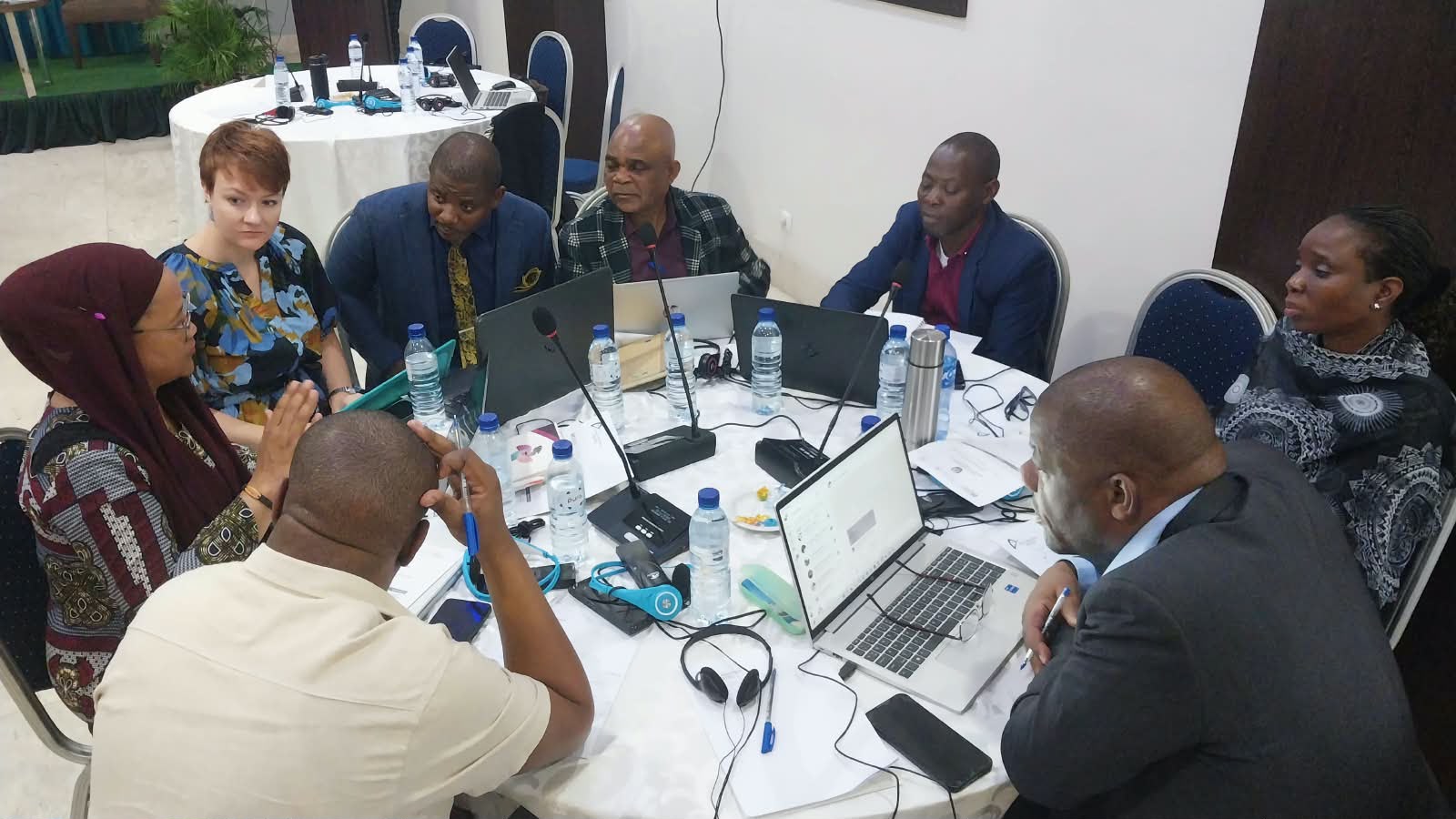
Around 50 participants took part in person including officials from MEC's central and provincial directorates, researchers from higher education institutions, members of the Local Education Group, and partner representatives. Over five days, the agenda moved from planning and field visits to a full national dialogue on four themes that Mozambique itself had identified as priorities: the professional development of teachers, equity, gender equality and inclusion, early childhood education, and the strengthening of education data systems. AU-IPED's Lukman Jaji opened the technical proceedings with a keynote on the continental education context, setting Mozambique's four priorities against SDG 4 and CESA 26-35.
What the classrooms and district offices showed
The field assessment that opened the week looked at Mozambique's Education Management Information System, known locally as SIGE, at every point in its chain: the Ministry, the provincial directorates, the district services, and the schools where the data originates. The picture that emerged was neither a success story nor a crisis, but something more useful: a clear map of what is already working and what needs investment.
On the encouraging side, the assessment found strong political will and genuine demand for data at the Ministry, effective coordination between national and sub-national offices, and generally timely collection and reporting. The Ministry also holds a remarkable asset: historical education data reaching back to 1986.
On the constrained side, the same system runs on a shortage of basic hardware, heavily manual processes even where digital tools exist, and limited training for the staff who keep it running. Those constraints deepen at provincial and district level, where infrastructure is thinner, submission methods vary from one district to the next, trained personnel are scarce, and the long historical record kept at the Ministry simply does not exist locally.
It was this evidence, gathered directly from the people who do the work, that grounded the discussions that followed.
“When a school register is completed well, a nation can plan well, and when nations plan well, a continent can hold itself accountable to its own children.”
AU-IPED, Opening Remarks, National Policy Dialogue, Maputo, 5 August 2026
Naming the difficulties as plainly as the achievements
Opening the Dialogue on 5 August, AU-IPED situated Mozambique's work within a continental mandate: as the Continental Education Strategy for Africa moves from its 2016 to 2025 cycle into CESA 26-35, quality, equity, inclusion, the teaching profession and reliable education data sit at the centre of the African Union's agenda. AU-IPED framed the field assessment as a direct contribution to that continental effort to build common EMIS norms and standards, one that only works if national systems like Mozambique's are strengthened from the ground up.
For MEC's Directorate of Planning, Statistics and Cooperation (DIPLEC), which hosted the Dialogue, the stakes were put in equally direct terms. Sub-Saharan Africa continues to carry some of the toughest education indicators in the world, including the largest population of out-of-school children anywhere and a learning crisis in which most ten-year-olds cannot read and understand a simple text. DIPLEC's National Director told participants that the region cannot afford to govern education by intuition, and welcomed the assessment's findings, whatever they showed, as exactly the kind of evidence that should shape reform.
Over the following two days, participants worked through each thematic area in turn: teacher professional development on day one, equity, gender equality, inclusion and early childhood education on day two, and, on the closing day, EMIS itself, where Jaji presented the field assessment's findings in full and the group used them to shape recommendations before turning to research-policy linkages and joint action planning.
From findings to a costed plan
The Dialogue did not end with a list of problems. It ended with a draft Action Plan and a costed, three-year programme for strengthening EMIS in Mozambique, organised around three pillars: infrastructure and technology, people and capacity, and standards and data use. Together, participants estimated the investment required at just over 3 million US dollars over three years, front-loaded for hardware, a digital EMIS platform and the digitisation of decades of paper records, then tapering as the system moves into steady, well-supported operation.
The recommendations are deliberately practical: deploy the hardware and connectivity that manual systems are currently working around, train and retain the staff who keep the system running, standardise how data moves from district to province, and put dashboards and school report cards into the hands of the people who can act on them. None of it is abstract. Each recommendation traces back to something a technician, a school director or a teacher described during those two days of field visits.
What comes next
The Mozambique National Dialogue is now one contribution to a larger continental effort. AU-IPED and MEC, with GPE-KIX partners, will work together to mobilise the resources and partnerships the Action Plan calls for, while the lessons from Mozambique's data system feed into the wider work of building common EMIS norms and standards for CESA 26-35.
The first step is already on the calendar: a meeting with the consortium of partners led by GIZ Mozambique, to begin the process of resource mobilisation for the EMIS investment plan the Dialogue produced.
For the technicians and teachers who spent two days answering questions about their registers, the test of the week will be a simple one: whether the plan drawn up in a Maputo hotel makes their daily work, and the decisions it feeds, a little easier.
-
Share:


