



Meeting the Data Challenge: Lesotho Principals and Teachers EMIS Modernization through DHIS2 for Education
Meeting the Data Challenge: Lesotho Principals and Teachers EMIS Modernization through DHIS2 for Education
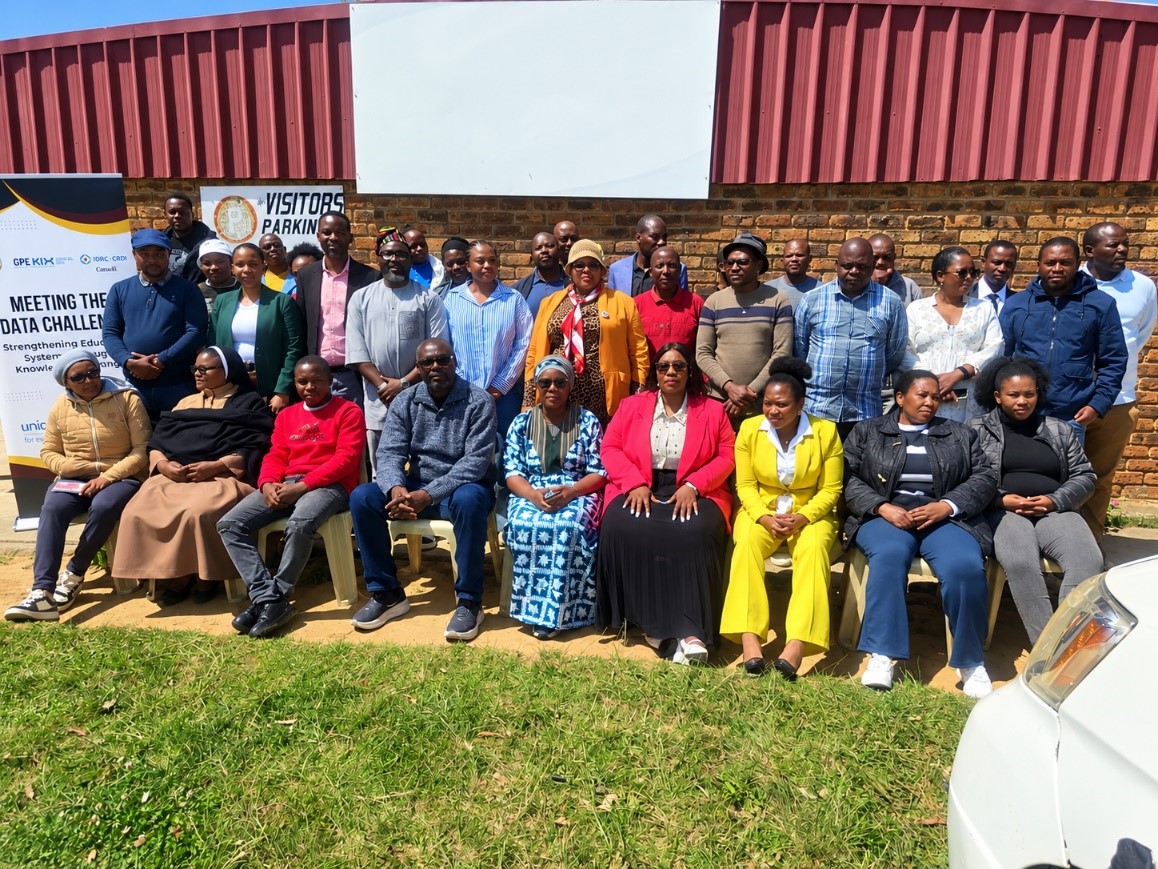
Leribe, Butha-Buthe, Berea Lesotho, 29 - 4 October 2026 – The Ministry of Education and Training (MoET) of Lesotho, in collaboration with the African Union’s Pan-African Institute for Education for Development (AU-IPED), under the Global Partnership for Education’s Knowledge and Innovation Exchange (GPE-KIX) Africa 19 Hub, a joint endeavour with Canada’s International Development Research Centre, has concluded a four-day technical capacity-building workshop and training for secondary school principals and teachers across the Leribe, Berea, and Butha-Buthe districts.
Held under the theme “Meeting the Data Challenge: Strengthening Education Systems Through Knowledge Exchange,” the training brought together school leadership and district teams to accelerate the national roll-out and operationalization of the DHIS2 for Education, specifically data entry, management and use.
The workshop provided a platform to reinforce that an Education Management Information System (EMIS) is far more than an administrative reporting tool. By focusing on data leadership, data ethics, practical capture methods, and decision-driven analytics, the engagement sought to convey the core value of education data, and position the District Health Information Software 2 (DHIS2) as a strategic driver of governance, resource planning, and educational reform.
The workshop opened with official remarks from AU-IPED coordinator Mr. Adoumtar Noubatour. He highlighted the role of the African Union and IPED in supporting member countries to enhance and modernize their EMIS systems. Mr Adoumtar emphasized the important role played by school teachers and principals in developing leaders for Lesotho and for Africa. The representative of the Principal Secretary of the Ministry of Education and Training, Dr. Makhube Ralenkoane reiterated the necessity of dependable, timely data to guide school-level interventions and national policy.
Setting the conceptual tone for the training, Dr. Beatrice Khamati Njenga, Lead Consultant at JMERC and an academic at the International Leadership University, facilitated a session on Leadership, Data Ethics, and Governance. Dr. Njenga stressed that school Principals are directly at the center of the country’s data ecosystem, and that their leadership determines the trustworthiness of the country’s data.
The presentation highlighted that effective data leadership requires establishing trust, protecting staff time for data entry, and using school dashboard insights visibly in decision-making. Dr. Njenga placed strong emphasis on integrity and values in reporting, reminding participants that honest data collection, even when exposing institutional shortcomings, is critical for genuine progress.
Principals were urged to adopt a learning-oriented mindset, treating reporting errors as system challenges rather than punishing staff or concealing inaccurate data "to avoid trouble". Grounded in the core ethical principles of privacy, purpose limitation, accuracy, fairness, and accountability, the session defined clear boundaries for safeguarding learners’ and teachers’ confidential records across all governance tiers.
Transitioning from principles to practice, district trainers guided participants through technical modules covering both aggregated and individual data workflows.
Participants examined the core dimensions of DHIS2, the "3 Ws" (What, Where, and When), and reviewed the fundamental "4 Cs" of data quality (Current, Complete, Consistent, and Correct). During hands-on laboratory sessions, the principals and IT personnel logged into the system to navigate both online and offline aggregated data capture modules, entering annual statistical returns and executing automated validation checks.
The training exercise expanded into individual-level data entry, focusing on individual teacher records, class management, and attendance monitoring. Participants engaged in practical exercises creating tailored dashboards and generating reporting rate summaries to monitor form completeness across facilities in real time.
Following the analytics and dashboard exercises, participants transitioned directly into interactive discussion, Q&A, and action planning. School heads defined concrete steps for embedding daily DHIS2 data routines into their respective school administrative schedules.
In her closing remarks, Dr. Beatrice Khamati Njenga commended the dedication of the educators from Leribe, Berea, and Butha-Buthe. She reiterated that building a reliable, transparent, and resilient national education information system relies fundamentally on the daily commitment and ethical leadership of school principals on the ground.
Through continued technical collaboration with AU-IPED and its KIX Africa 19 partners, the Ministry of Education and Training (MoET) continues to advance its commitment to data-informed governance, supporting quality and inclusive education for all learners in Lesotho.
-
Share:


