




Report on the DHIS2 for Education Training of Secondary School Principals and Teachers in Lesotho
Report on the DHIS2 for Education Training of Secondary School Principals and Teachers in Lesotho
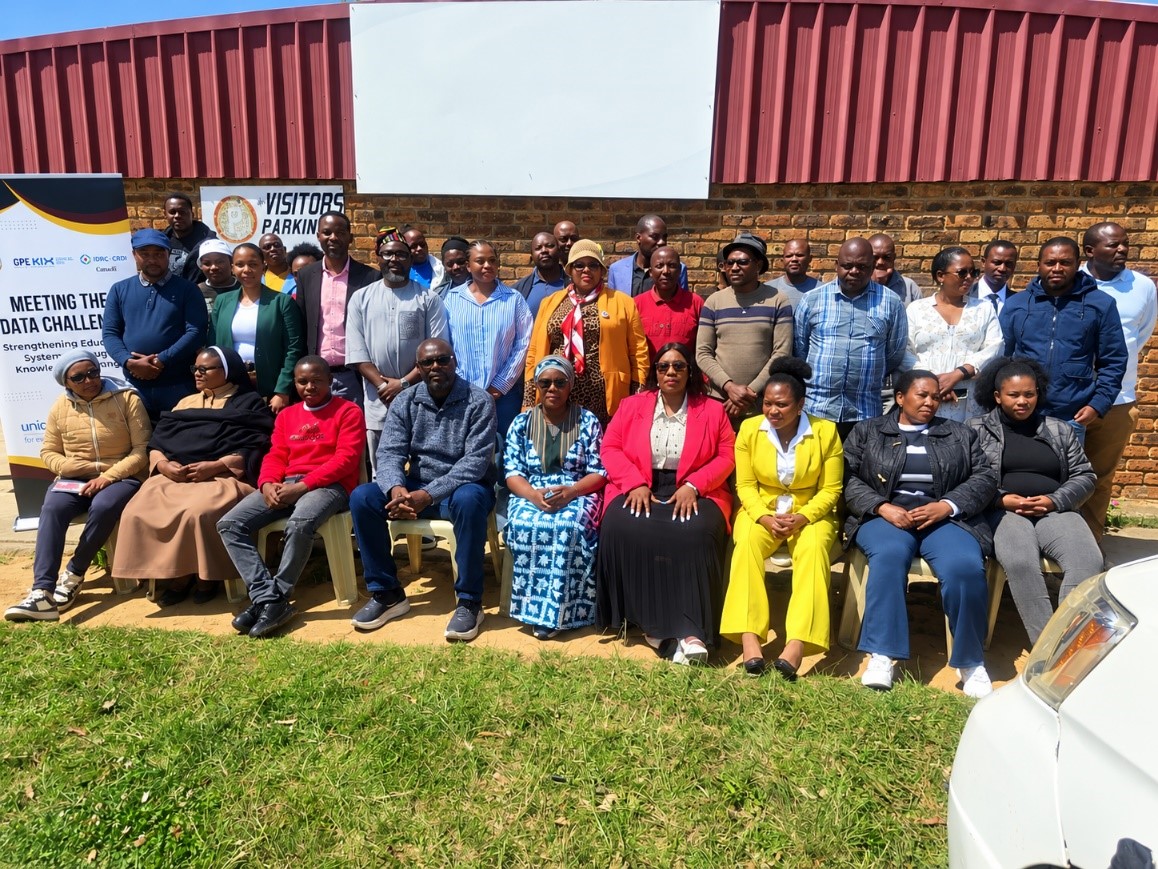
Meeting the Data Challenge: Strengthening Education Systems Through Knowledge Exchange
Prepared for the African Union Pan-African Institute for Education for Development (AU-IPED) under the GPE-KIX Africa 19 Hub
|
|
|
|
Activity |
Training of Secondary School Principals and Teachers on DHIS2 for Education |
|
Venue |
Leribe, Butha-Buthe, and Berea Districts, Lesotho |
|
Dates |
30 September – 4 October 2026 |
|
Organizers |
MoET Lesotho in collaboration with AU-IPED |
|
Programme |
GPE-KIX Africa 19 Hub – country support to Lesotho |
|
Project owner |
AU-IPED, on behalf of the KIX Africa 19 consortium (AUC, UNESCO and UNICEF) |
|
Funding |
GPE-KIX, a joint initiative funded by the Global Partnership for Education (GPE) and the International Development Research Centre (IDRC) |
|
Technical facilitation |
JMERC, with District Trainers |
|
Prepared by |
Dr. Beatrice Khamati Njenga, JMERC |
|
Date of report |
10/06/2026 |
Acronyms and Abbreviations
|
|
|
|
AU |
African Union |
|
AU-IPED |
African Union Pan-African Institute for Education for Development |
|
AUC |
African Union Commission |
|
CESA |
Continental Education Strategy for Africa |
|
DHIS2 |
District Health Information Software 2, used here as DHIS2 for Education |
|
EMIS |
Education Management Information System |
|
GPE |
Global Partnership for Education |
|
GPE-KIX |
GPE Knowledge and Innovation Exchange |
|
IDRC |
International Development Research Centre (Canada) |
|
JMERC |
Lead technical consultancy for the training |
|
KIX Africa 19 |
GPE-KIX Africa 19 Hub, a regional hub led by a consortium of the AUC (through AU-IPED), UNESCO and UNICEF |
|
LEMIS |
Lesotho Education Management Information System |
|
MoET |
Ministry of Education and Training, Lesotho |
|
SDG 4 |
Sustainable Development Goal 4 (Quality Education) |
|
SEMIS |
Student Education Management Information System (individual learner and staff module) |
|
UNESCO |
United Nations Educational, Scientific and Cultural Organization |
|
UNICEF |
United Nations Children’s Fund |
Executive Summary
From 30 September to 4 October 2026, the Ministry of Education and Training of Lesotho, in collaboration with AU-IPED, conducted a technical capacity-building workshop for secondary school principals and teachers in the Leribe, Butha-Buthe, and Berea districts. The activity was implemented under the GPE Knowledge and Innovation Exchange (GPE-KIX) Africa 19 Hub, which is funded by the Global Partnership for Education (GPE) and the International Development Research Centre (IDRC), with AU-IPED as the project owner. The training supported the national roll-out and operationalization of DHIS2 for Education, with emphasis on data entry, data management and data use. It was held under the theme "Meeting the Data Challenge: Strengthening Education Systems Through Knowledge Exchange".
The programme combined three components: (i) leadership, data ethics and governance; (ii) hands-on technical training in aggregate and individual-level data capture, data quality, reporting and dashboards; and (iii) data use for decision-making, including action planning by school heads. The workshop was grounded in the fact that 365 secondary schools across Lesotho now generate, store and report data through DHIS2, which makes every school a data custodian and every principal a data leader.
The workshop's central message was that the trustworthiness of national education data depends on the daily commitment and ethical leadership of school principals. Participants navigated online and offline aggregate data capture, ran validation checks, explored individual teacher records, class management and attendance monitoring, built tailored dashboards and generated reporting-rate summaries.
This report recommends four actions to consolidate the gains of the training: (1) development of a national EMIS policy for Lesotho; (2) further training of EMIS champions; (3) data leadership training for district and national personnel; and (4) a reward system for EMIS champions.
1. Introduction and Background
1.1 The GPE-KIX Africa 19 Hub
The Global Partnership for Education Knowledge and Innovation Exchange (GPE-KIX) is a joint initiative of the Global Partnership for Education (GPE) and Canada’s International Development Research Centre (IDRC), which together fund it. GPE-KIX supports partner countries to strengthen their education systems by generating, mobilising and applying evidence to improve education policy, planning, implementation and accountability.
In Africa, the KIX Africa 19 Hub is implemented by a consortium of the African Union Commission (AUC), UNESCO and UNICEF. Within the consortium, the AUC acts through AU-IPED, its specialised institution for education data and EMIS, which owns and leads the country support project under which this training was delivered. UNESCO and UNICEF contribute as consortium partners. The Hub places strong emphasis on strengthening EMIS as a foundation for effective sector governance, in line with the African Union’s EMIS Norms and Standards and the Continental Education Strategy for Africa (CESA).
Under its country support mechanism, the Hub provides targeted technical assistance to Member States to improve the availability, quality and use of education data. The Lesotho training reported here is one of these country support activities. Beyond its direct benefits to Lesotho, it is intended to generate transferable lessons and knowledge products for other KIX Africa 19 countries.
1.2 Context
Reliable and timely education data is the foundation of evidence-based planning, resource allocation and policy reform. The African Union supports Member States to modernize their EMIS through AU-IPED, in line with the Continental Education Strategy for Africa (CESA) and SDG 4. Lesotho has adopted DHIS2 for Education as the platform for its national education information system (LEMIS), supporting both aggregate (school-level) and individual-level (learner and staff) data.
With 365 secondary schools now required to report through DHIS2, the quality of national data depends on the people who capture, review and approve it at school level. Principals sit at the center of this data ecosystem. How they lead determines whether the data is trusted and used.
1.3 Rationale for the Training
The training was designed to reinforce that an EMIS is more than an administrative reporting tool. By combining data leadership, data ethics, practical capture methods and decision-driven analytics, the workshop sought to position DHIS2 as a strategic driver of governance, resource planning and education reform.
2. Objectives and Expected Outcomes
2.1 Objectives
The workshop aimed to:
-
accelerate the national roll-out and operationalization of DHIS2 for Education in secondary schools;
-
build the capacity of principals and teachers to enter, manage and use education data;
-
promote data leadership, data ethics and governance at school level; and
-
equip participants to use dashboards and reports to support school management and communicate findings to education stakeholders.
2.2 Expected Outcomes
By the end of the training, participants were expected to be able to:
-
explain the purpose of DHIS2 as an EMIS;
-
log in securely and navigate the system;
-
select the correct school, dataset and reporting period, and enter aggregate data through the online and offline modules;
-
identify and correct common data quality problems using validation rules;
-
use reports, dashboards and reporting-rate summaries to interpret education data;
-
apply basic principles for working with individual learner and staff records;
-
protect personal information and follow authorized access and sharing practices; and
-
describe the responsibilities of teachers, principals, district teams and national authorities.
3. Approach and Methodology
3.1 Participants
The training targeted secondary school principals, teachers and IT personnel from the Leribe, Butha-Buthe, and Berea districts, supported by district education and EMIS staff.
3.2 Facilitation
Sessions were facilitated by Dr. Beatrice Khamati Njenga (Lead Consultant, JMERC, and an academic at the International Leadership University) and Mr. Daniel Wasonga (Consultant, JMERC). Technical sessions were led by District Trainers.
3.3 Training Method
The workshop followed a "principles to practice" approach: a conceptual session on leadership, ethics and governance was followed by presentations and hands-on laboratory sessions on a live DHIS2 environment, then by discussion, question-and-answer and action planning. A role-based training manual, DHIS2 for Education: Training Manual for School, District and Ministry Users, supported delivery. It includes practical exercises, scenario-based ethics and leadership discussions, and a post-training knowledge check. The detailed programme is at Annex 1.
4. Proceedings of the Workshop
4.1 Opening Session
The workshop opened with remarks from the AU-IPED Coordinator, Mr. Adoumtar Noubatour. He highlighted the role of the African Union and AU-IPED in supporting Member States to enhance and modernize their EMIS, and stressed the important role of school principals and teachers in developing leaders for Lesotho and for Africa.
The Principal Secretary of the Ministry of Education and Training was represented by Dr. Makhube Ralenkoane, who reiterated the need for dependable, timely data to guide school-level interventions and national policy.
4.2 Session: Leadership, Data Ethics and Governance
Dr. Njenga's session set the conceptual tone for the training. It emphasized that principals are at the center of the country's data ecosystem and that every school is now a data custodian, not only a data source. The session covered three parts.
Leadership: the principal as data champion. Effective data leadership means modelling accurate and timely reporting, using DHIS2 data visibly in decisions, protecting staff time for data entry, asking questions before assigning blame, recognizing good practice and reviewing the school dashboard every term. Principals were urged to treat reporting errors as system challenges rather than punishing staff or concealing inaccurate data "to avoid trouble". Honest reporting, even when it exposes institutional shortcomings, was presented as essential for ensuring effective interventions and genuine progress.
Data ethics: five core principles. Participants discussed privacy, purpose limitation, accuracy, fairness and accountability. The session defined boundaries for safeguarding learners' and teachers' confidential records. These include aggregating data before sharing it outside the school, never sharing login credentials, and never publishing individual learner results or using data to shame teachers or learners.
Data governance: three pillars. Governance was framed around access (who can see and enter which data), accuracy (how data is checked and corrected) and accountability (who answers for how data is used). Participants reviewed a role matrix covering teachers, principals, district education offices and MoET, together with a governance checklist and a list of "red flags" that indicate the need for escalating matters to the next level of authority. School-level governance was placed within the wider framework of national data protection requirements, MoET policies, DHIS2 access protocols and continental frameworks, including CESA data governance principles; as well as ethical leadership demands for honesty, integrity and care.
4.3 Technical Sessions
District Trainers introduced DHIS2 and guided participants through practical modules.
-
Core concepts. Participants examined the "3 Ws" of DHIS2 data (What, Where and When) and the "4 Cs" of data quality (Current, Complete, Consistent and Correct).
-
Aggregate data capture. Principals and IT personnel logged into the system and worked through both online and offline modules. They entered annual statistical returns and ran automated validation checks.
-
Individual-level data. Participants practiced entering individual teacher records, class management and attendance monitoring.
-
Reports and dashboards. Participants created tailored dashboards and generated reporting-rate summaries to monitor the completeness of submissions across facilities in real time.
4.4 Action Planning, Evaluation and Closing
In the discussion and action-planning session, school heads defined concrete steps for embedding daily DHIS2 data routines into their school administrative schedules. A workshop evaluation was administered.
In her closing remarks, Dr. Njenga commended the dedication of the educators from the three districts. She reiterated that a reliable, transparent and resilient national education information system relies on the daily commitment and ethical leadership of school principals.
5. Key Outcomes and Observations
-
Leadership of data is now recognized as a principal's responsibility. The training positioned data leadership, ethics and governance as core leadership functions rather than paperwork, with the message that good data leadership is simply good leadership applied to information.
-
Practical competence in DHIS2 was built. Participants gained hands-on experience in online and offline aggregate capture, validation, individual-level records, reports and dashboards.
-
A shared ethical and governance vocabulary was established. Participants now share common reference points: the five ethical principles, the three governance pillars, the role matrix and the escalation red flags.
-
School-level commitments were made. Through action planning, school heads set out steps to embed regular DHIS2 routines in school schedules.
-
The training linked school practice to national and continental frameworks. The sessions connected school-level data practice to Lesotho's data protection law, MoET guidance, SDG 4 and CESA.
6. Challenges and Gaps Identified
The preparation and delivery of the training, and the content of the training manual, point to the following gaps that should be addressed to sustain the results.
-
No consolidated national EMIS policy framework. The role matrix used in training is a training model and is expressly not a substitute for an official Ministry delegation or the current LEMIS access matrix. Roles, approval workflows, data-sharing procedures and escalation routes need formal national endorsement.
-
Support and escalation arrangements need confirming. The training manual notes that national support contacts and the official LEMIS support structure must still be supplied, and that local roles, datasets, reporting periods and approval workflows must be validated before training.
-
Coverage is still limited. The training covered three districts. With 365 secondary schools reporting through DHIS2, the skills and practices introduced must be extended and sustained across the country.
-
Sustaining behaviour change. Data leadership behaviours, such as protecting data-entry time, reviewing dashboards each term, promoting honesty above ‘looking good’, and treating errors without blame, require reinforcement beyond a single workshop.
-
Institutional capacity above school level. District and national personnel review, consolidate and share school data, and therefore need the same grounding in data leadership, ethics and governance as school leaders.
-
Connectivity and security. The offline module supports continuity where connectivity is unreliable, but it requires continued attention to device and data security.
7. Lessons Learned
-
Pairing a leadership, ethics and governance session with hands-on technical practice helps participants see data quality as a management responsibility as well as a software function.
-
Involving principals directly, rather than delegating data work entirely, is central to data trust and use.
-
Scenario-based exercises, such as responding to a request for raw learner data or correcting inaccurate enrolment figures, make ethical principles concrete.
-
Participation of AU-IPED and the Ministry at opening level signals institutional commitment and helps place school-level work in a continental context. Delivering the training under the GPE-KIX Africa 19 Hub also allows Lesotho’s experience to feed into peer learning across KIX Africa 19 countries.
8. Conclusions
The training advanced Lesotho's EMIS modernization by strengthening the people at the centre of the system. Principals and teachers from Leribe, Butha-Buthe, and Berea left with practical DHIS2 skills, a clearer understanding of their role as data leaders and custodians, and concrete school-level action plans. To protect and build on this investment, Lesotho needs a supportive policy environment, a durable community of trained champions, leadership capacity at district and national levels, and incentives that recognize good data practice.
9. Recommendations
The following four recommendations are submitted to MoET and AU-IPED for consideration. The responsible parties and timeframes are proposals for discussion.
|
No. |
Recommendation |
Proposed lead |
Proposed timeframe |
|
1 |
Develop a national EMIS policy for Lesotho |
MoET, with AU-IPED technical support |
Medium term |
|
2 |
Provide further training for EMIS champions |
MoET and District Education Offices, with AU-IPED and technical partners |
Short to medium term |
|
3 |
Provide data leadership training for district and national personnel |
MoET, with AU-IPED and technical partners |
Short to medium term |
|
4 |
Establish a reward system for EMIS champions |
MoET, with District Education Offices |
Medium term |
9.1 Develop a National EMIS Policy for Lesotho
Rationale. DHIS2 is now used by 365 secondary schools, yet roles, approval workflows, data-sharing rules, escalation procedures and school-level governance depend largely on training materials and general frameworks. A national EMIS policy would give these arrangements formal authority and consistency.
Proposed actions.
-
Establish a multi-stakeholder drafting team led by MoET, with participation of districts, school leaders, the Data Protection Commission and technical partners.
-
Define the purpose, scope and mandate of LEMIS, including data ownership, standards and definitions, reporting calendars and data quality requirements.
-
Formalize the roles and responsibilities of teachers, principals, district education offices and national authorities, including the entry, approval, submission and external sharing of data, and user access management.
-
Embed data protection, privacy, ethics and incident-reporting provisions aligned with the Data Protection Act, 2011 (Act No. 5 of 2012).
-
Align the policy with continental and global frameworks, including CESA, the AU data governance principles and SDG 4.
-
Provide for a funded implementation plan, a national support and escalation structure, and a monitoring and review mechanism.
9.2 Further Training of EMIS Champions
Rationale. Principals and teachers trained in this workshop are the first line of data quality and data use in their schools. A single workshop introduces skills but does not by itself sustain them. Continued, progressively advanced training will turn trained participants into reliable champions and peer mentors.
Proposed actions.
-
Establish a register of EMIS champions in each district, drawn from the trained principals, teachers and IT personnel.
-
Design a progressive learning pathway covering advanced DHIS2 analysis, data quality management, SEMIS and individual-level records, troubleshooting, and data protection.
-
Provide refresher and follow-up sessions, using the competency exercises and knowledge check in the training manual to assess progress.
-
Equip champions to train and mentor colleagues, and support peer learning networks and communities of practice among schools.
-
Extend training to the remaining districts so that all 365 secondary schools are covered.
-
Keep the training manual up to date with the current LEMIS configuration, roles and support contacts.
9.3 Data Leadership Training for District and National Personnel
Rationale. District and national officers review, consolidate, analyse and officially share education data. The leadership, ethics and governance principles taught to principals must be mirrored at these levels, so that school leaders are supported by consistent practice and by managers who use data in decisions without blame.
Proposed actions.
-
Develop a data leadership programme for district education officers, EMIS and planning staff, and relevant national personnel, adapted from the leadership, ethics and governance module used in this workshop.
-
Cover supportive supervision of schools, review and approval of submissions, data quality verification, responsible data sharing, use of dashboards in planning and budgeting, and handling of breaches and irregularities.
-
Include a leadership practice component, such as visibly using dashboards in district and national meetings, and treating errors as system issues.
-
Link the programme to AU-IPED’s continental support under the GPE-KIX Africa 19 Hub and, where possible, to peer exchange with other KIX Africa 19 Member States.
9.4 Reward System for EMIS Champions
Rationale. The training emphasized recognizing good practice and acknowledging teachers and schools that report accurately and on time. A formal reward system would reinforce desired behaviors, motivate champions who carry extra responsibility, and signal that the Ministry values data work.
Proposed actions.
-
Define transparent criteria for recognition based on indicators such as timeliness, completeness, consistency and correctness of reporting, quality of data use in school decisions, and mentoring of peers.
-
Design a mix of recognition mechanisms, for example district and national awards, certificates, public acknowledgement, priority access to further training and professional development opportunities, and appropriate material support.
-
Ensure the system rewards honest reporting and improvement rather than only high performance, so that it does not create pressure to conceal problems or alter data. This is consistent with the ethical principles taught in the workshop.
-
Anchor the system in the national EMIS policy and review it periodically.
10. Way Forward
The following next steps are proposed to move from the training to implementation:
-
Share this report with MoET leadership, District Education Offices and AU-IPED, and seek endorsement of the four recommendations.
-
Constitute a task team to begin work on the national EMIS policy.
-
Compile the register of EMIS champions and agree a training calendar for the next phase.
-
Plan data leadership training for district and national personnel.
-
Develop and consult on criteria for the champions' reward system.
-
Agree indicators for tracking progress, such as reporting rates, timeliness and data quality scores for the participating districts, and review them at the start of each school term.
Annex 1: Workshop Programme
Day 1
|
Time |
Session |
Facilitator / Presenter |
|
08:30 – 09:00 |
Registration |
|
|
09:00 – 09:15 |
Opening remarks |
AU-IPED Representative |
|
09:15 – 09:30 |
Opening remarks |
Principal Secretary, MoET (represented) |
|
09:30 – 09:45 |
Introductions, workshop objectives and expected outcomes |
Dr. Beatrice Njenga, Lead Consultant, JMERC |
|
09:45 – 10:15 |
Group photo, tea / coffee break |
|
|
10:15 – 11:00 |
Presentation: Leadership, Data Ethics and Governance |
Dr. Beatrice Njenga |
|
11:00 – 11:45 |
Introduction to DHIS2 (presentation) |
District Trainers |
|
11:45 – 13:00 |
Practical: Data capturing, aggregated data (online module) |
District Trainers |
|
13:00 – 14:00 |
Lunch |
|
|
14:00 – 15:30 |
Practical: Data capturing, aggregated data (offline module) |
District Trainers |
|
15:30 – 16:00 |
Recap, Q&A and close of Day 1 |
Daniel Wasonga, Consultant, JMERC |
Day 2
|
Time |
Session |
Facilitator / Presenter |
|
08:30 – 09:00 |
Recap of Day 1 |
Daniel Wasonga |
|
09:00 – 11:00 |
Individual teacher training (online module) |
District Trainers |
|
11:00 – 11:15 |
Tea / coffee break |
|
|
11:15 – 12:30 |
Making reports and creating dashboards |
District Trainers |
|
12:30 – 13:30 |
Lunch |
|
|
14:30 – 15:00 |
Discussion, Q&A and action planning |
|
|
15:00 – 15:30 |
Closing remarks and way forward |
Dr. Beatrice Njenga |
Annex 2: Summary of the Leadership, Data Ethics and Governance Framework
|
Element |
Key content |
|
Six leadership behaviors |
Model accuracy; use data visibly; protect time; recognize good practice; ask, don't blame; stay curious |
|
Five ethical principles |
Privacy; purpose limitation; accuracy; fairness; accountability |
|
Three governance pillars |
Access; accuracy; accountability |
|
Escalation red flags |
Data altered without explanation; external request for raw, unaggregated data; shared or compromised login; learner data in an unauthorized report, post or conversation |
DHIS2 role matrix
|
Role |
Enters data |
Approves / submits |
Shares externally |
|
Teacher |
Yes |
No |
No |
|
Principal |
Yes (oversight) |
Yes |
No |
|
District Education Office |
View / support |
Reviews |
With clearance |
|
MoET / National |
View |
Consolidates |
Yes (official) |
This matrix is a training model and does not replace official Ministry delegations or the current LEMIS access matrix.
-
Share:


