



Mozambique convenes GPEKIX National Policy Dialogue to turn evidence into action for education
Mozambique convenes GPEKIX National Policy Dialogue to turn evidence into action for education
PRESS RELEASE
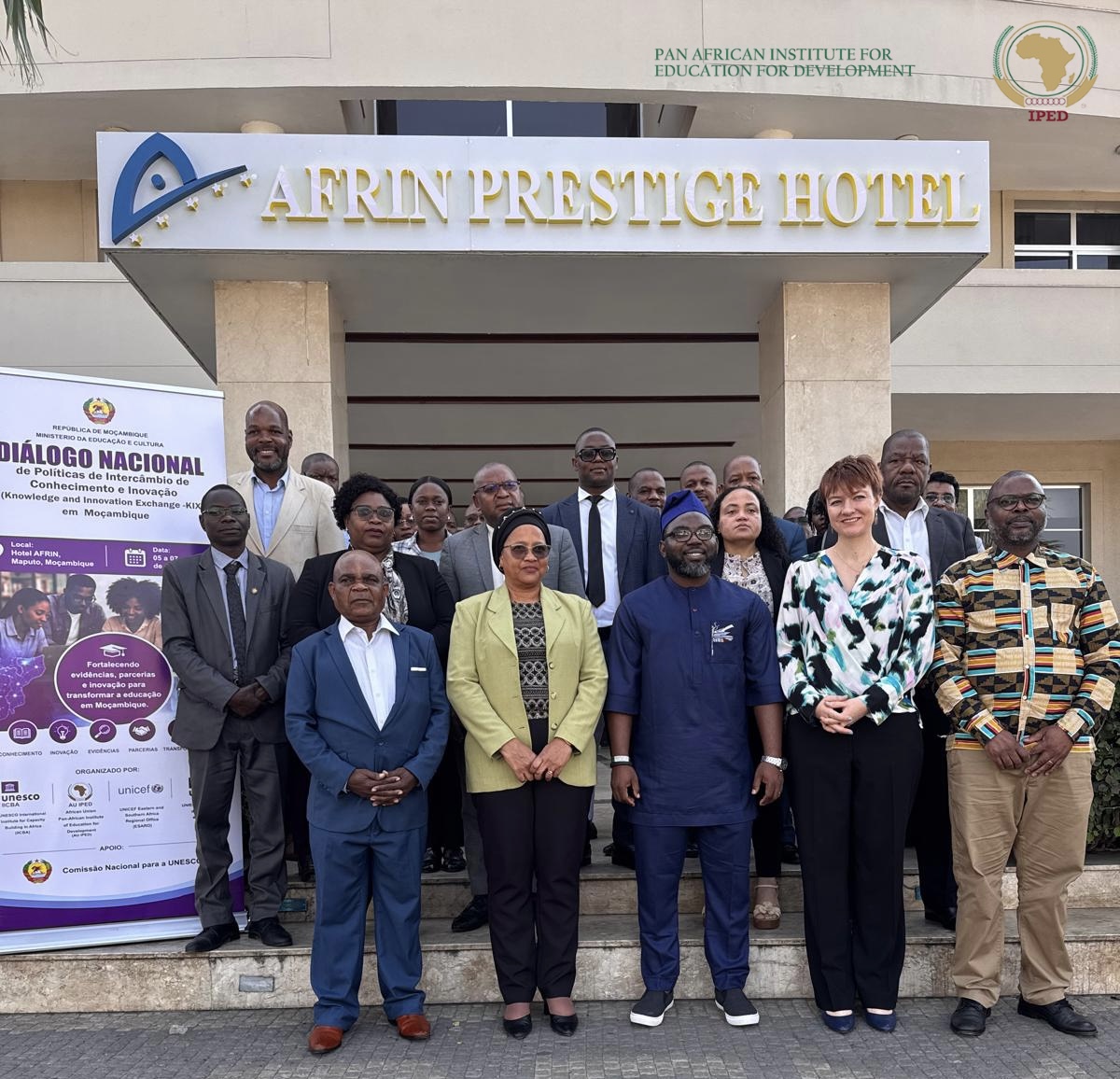
Maputo, Mozambique, 7 August 2026 - The Ministry of Education and Culture of Mozambique, together with the African Union Pan-African Institute of Education for Development (AU-IPED), this week convened the National Policy Dialogue on Knowledge and Innovation Exchange (KIX) in Maputo. Held from 3 to 7 August 2026, the Dialogue was organized through the Global Partnership for Education KIX Africa 19 Hub - a joint initiative with Canda’s International Development Research Centre and with the support of UNESCO International Institute for Capacity Building in Africa.
Bringing together participants from government, higher education and research institutions, development partners and the Local Education Group, the Dialogue set out to strengthen knowledge sharing, innovation and collaboration across Mozambique's education sector, and to anchor public policy in evidence. It was preceded by field visits to schools and district education services in and around Maputo - including a field assessment of the national Education Management Information System, whose findings fed directly into the thematic sessions, group work and plenary debate that followed.
On teacher development, participants called for a standardized curriculum for initial and continuing teacher training, greater investment in continuous professional development and fuller implementation of the country's Teacher Policy, alongside expanded use of digital platforms and stronger training in science, technology, engineering and mathematics.
On gender equity and inclusion, delegates underscored the need for gender-responsive, accessible school infrastructure - including adequate sanitation for girls, and for sustained action to prevent early unions, early pregnancy and gender-based violence. They pointed to practices already showing results, among them the National School Mentorship Program, girls' clubs, school feeding and inclusive-education approaches, while stressing that awareness efforts must engage boys and girls alike.
On early childhood education, the Dialogue highlighted the urgency of expanding access to pre-school, particularly in rural and vulnerable communities, professionalizing the careers of early childhood educators, and integrating education with health, nutrition and social protection. Participants drew on strong evidence that early investment yields high lifelong returns and reduces later repetition and dropout, and pointed to community-run preschools - supported by families, churches and civil society, as a promising, sustainable model for widening access and easing children's transition into primary school.
As the Dialogue concluded, these discussions - together with the findings of the field assessment, have been consolidated into Mozambique's national Action Plan, setting out shared priorities, responsible actors and next steps for future collaboration amongst partners.
The National Policy Dialogue reflects Mozambique's commitment to Sustainable Development Goal 4 and the Continental Education Strategy for Africa, and to advancing knowledge, innovation and collaboration in the transformation of education systems across the continent.
-
Share:


